
PSLE English Tuition Singapore
Primary 5–6 PSLE English tuition | Composition, comprehension, oral & listening
Maximum teacher-to-student ratio 1:6 | On-site and online lessons
English Language Specialists
Prepare for all four PSLE English papers
The PSLE English examination is a critical component determining your child’s Achievement Level and secondary school placement. Success requires excellence across four distinct papers—Composition & Language, Comprehension, Listening Comprehension, and Oral Communication—each testing different language competencies. Many students struggle not from lack of ability but from insufficient training in examination techniques, composition structure, and confident oral expression.
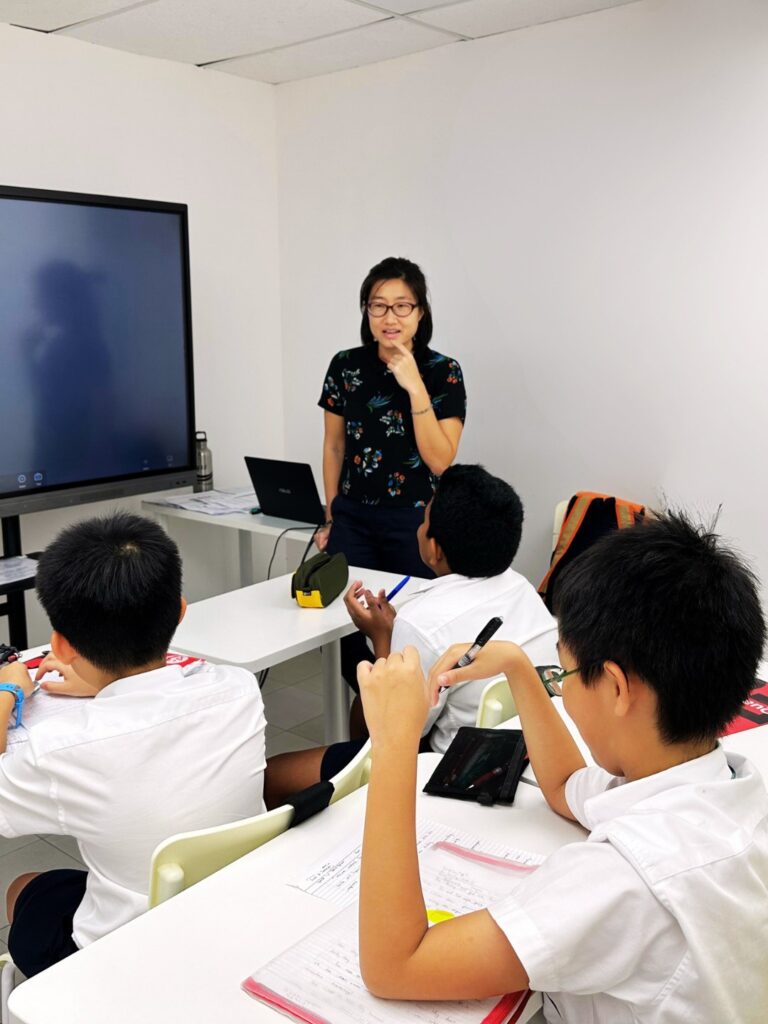
At Future Academy, our PSLE English tuition programme develops comprehensive English language skills through expert teaching in small groups with a maximum teacher-to-student ratio of 1:6. Our experienced English specialists understand what PSLE English demands and train students systematically across all four papers. This format allows for personalised attention while fostering collaborative learning—essential for English language development where students need regular opportunities to write, speak, discuss ideas, and receive detailed feedback. Many families also choose our PSLE lessons as a foundation for a stronger start in Sec 1, especially if they are aiming for IP schools.
In our small-group format (maximum teacher-to-student ratio of 1:6), students receive composition feedback, regular speaking practice, targeted grammar and vocabulary support, and guidance for weaker areas. We focus on clear writing structure, comprehension strategies, oral communication, and exam techniques so students are ready for PSLE and secondary school English.
The PSLE English Examination
Understanding the PSLE English Challenge
PSLE English consists of four papers testing comprehensive language abilities. Success requires mastery of distinct skill sets from creative writing to confident oral expression to analytical comprehension.
All Four Papers
Paper 1 (Writing: Situational & Composition), Paper 2 (Language Use & Comprehension), Paper 3 (Listening), Paper 4 (Oral)—comprehensive assessment demanding diverse language competencies.
Multi-Dimensional Skills
Creative composition writing, grammar and vocabulary mastery, reading comprehension, confident oral communication, focused listening—all require dedicated practice and technique training.
A core PSLE subject
PSLE uses Achievement Levels (AL1–AL8), so consistent performance matters. Strong English supports overall PSLE results and helps students cope with secondary school English.
Our Teaching Methodology
Our PSLE English Teaching Approach
Developing Strong Composition Skills
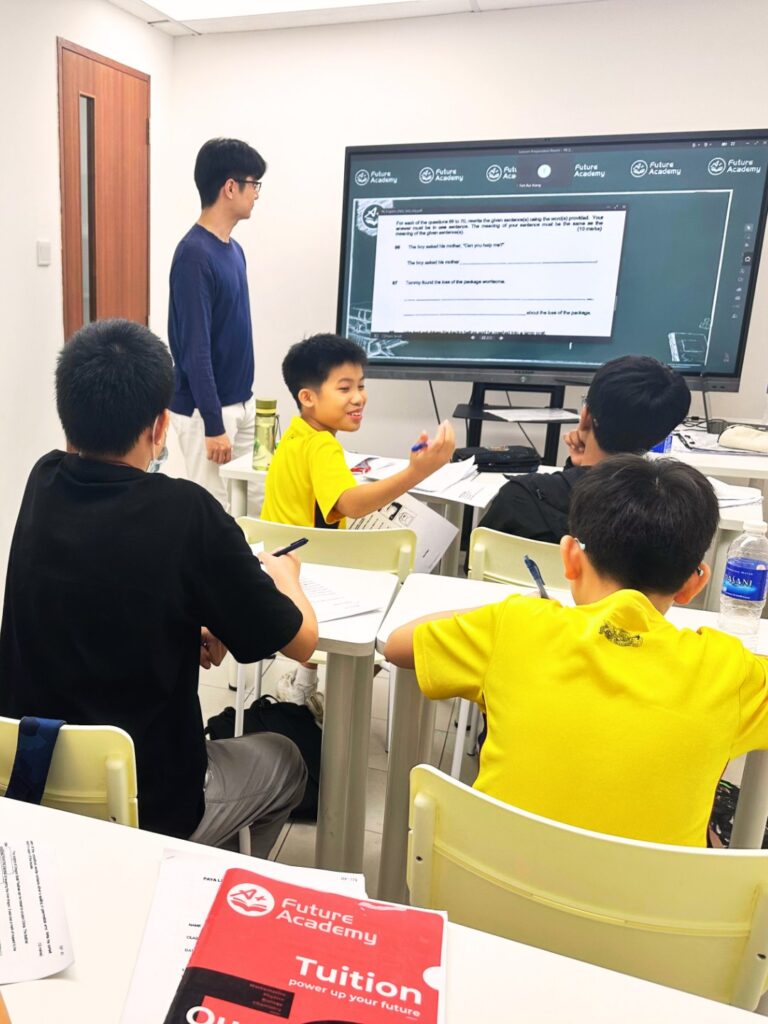
Our composition training builds creative and technical writing abilities. We teach systematic brainstorming methods, master narrative structure with engaging openings and satisfying conclusions, develop “show, do not tell” techniques, and enhance vocabulary beyond basic words. Regular timed practice builds speed and stamina, while detailed personalised feedback on every composition supports continuous improvement and skill internalisation.
Comprehension skills and answering technique
We develop both understanding and strategic examination skills. Students learn efficient reading strategies, question type recognition, evidence-based answering, and paraphrasing skills. MCQ techniques for grammar and vocabulary sections, editing skills for identifying errors quickly, and systematic time management ensure students complete papers efficiently while maintaining accuracy across all sections.
Building Confident Oral Performance
Students practise reading aloud with proper pronunciation and expression, learn to analyse visual stimuli systematically, and build natural conversational fluency. With a maximum teacher-to-student ratio of 1:6, students get regular opportunities to speak in class and receive timely feedback on pronunciation, grammar, and content.
The Small Group Advantage
How 1:6 Small Groups Benefit PSLE English Learners
Language learning requires active practice, immediate feedback, and regular application—all optimised in small groups. This is essential for English language development where students need frequent speaking and writing opportunities.
Essential Speaking Practice
With a maximum teacher-to-student ratio of 1:6, students have more opportunities to read aloud, participate in discussions, and practise oral responses regularly. Teachers can give timely feedback on pronunciation, grammar, and content—harder to do consistently in large classes.
Detailed Writing Feedback
Every student’s written work receives detailed, personalised feedback. Tutors identify individual writing patterns, suggest specific improvements, and track progress over time. Students revise their work based on feedback, internalising effective techniques. This is hard to do consistently in large classes where marking is superficial or significantly delayed.
Personalised skill development
Tutors identify each student’s specific strengths and weaknesses across all papers, provide targeted practice addressing individual needs, and adapt instruction pace and difficulty appropriately. Progress is monitored systematically across composition, comprehension, oral, and listening—ensuring balanced development and no weak areas remain unaddressed.
Confidence Building for Success
PSLE English anxiety is common, particularly for oral and writing components. Our small groups create safe environments for practicing speaking without embarrassment and receiving writing feedback constructively. As students experience regular success, their confidence grows—translating directly to examination performance as confident students approach all papers more calmly and effectively.
Student Transformations
Student progress stories (PSLE English)
From a weaker writer to clearer structure: Amanda’s progress
Amanda joined in Primary 5 with basic, predictable compositions. Through systematic training in narrative structure and “show, do not tell” techniques, her writing became more detailed and coherent. Regular feedback helped her improve sentence control, vocabulary choice, and relevance to the question.
Building confidence for oral: Daniel’s progress
Daniel was stronger in written papers but felt anxious about oral. In a small group, he had regular opportunities to read aloud, discuss the stimulus, and answer questions in a supportive setting. Over time, he became clearer in expression and more confident under time pressure.
From mid-range to stronger performance: Emma’s progress
Emma wanted to improve overall performance across writing and comprehension. We focused on planning, tighter paragraphing, stronger vocabulary use, and faster comprehension techniques. With consistent practice and feedback, she became more accurate and more confident across papers.
Flexible Options
Flexible Learning Modes for Primary 6 Students
We understand Primary 6 is an incredibly busy year. Our PSLE English tuition offers flexible learning modes to accommodate different needs and preferences.
On-Site Learning
Bugis, Bukit Timah, Braddell. Focused environment with direct teacher-student interaction. Particularly beneficial for oral practice. Excellent MRT connectivity.
Hybrid Learning
Mix on-site and online attendance based on schedule needs. Attend on-site for oral-intensive sessions while joining online when schedule conflicts arise. No penalty for switching modes.
Online via ClassIn
Online lessons with a maximum teacher-to-student ratio of 1:6. Suitable for all paper components, including oral practice. Interactive platform with video, audio, whiteboard, and screen sharing.
FAQ
FAQs About PSLE English Tuition
Book PSLE English lessons
english Lessons Available | No Obligation | Experience Our Small Group Approach
✓ Max 1:6 teacher-to-student ratio ✓ Composition, comprehension, oral & listening ✓ On-site and online lessons