

PSLE Math Tuition Singapore
Primary 4–6 PSLE Math tuition | Word problems, heuristics and clear working
Maximum teacher-to-student ratio 1:6 | On-site and online lessons
PSLE Math Specialists
Build confident problem solvers for PSLE Math
The PSLE Math examination stands as one of the most challenging milestones in your child’s primary school journey. Unlike lower primary math, PSLE Math demands more than calculation accuracy—it requires strong conceptual understanding, sophisticated problem-solving skills, and the ability to apply multiple heuristics to unfamiliar questions.
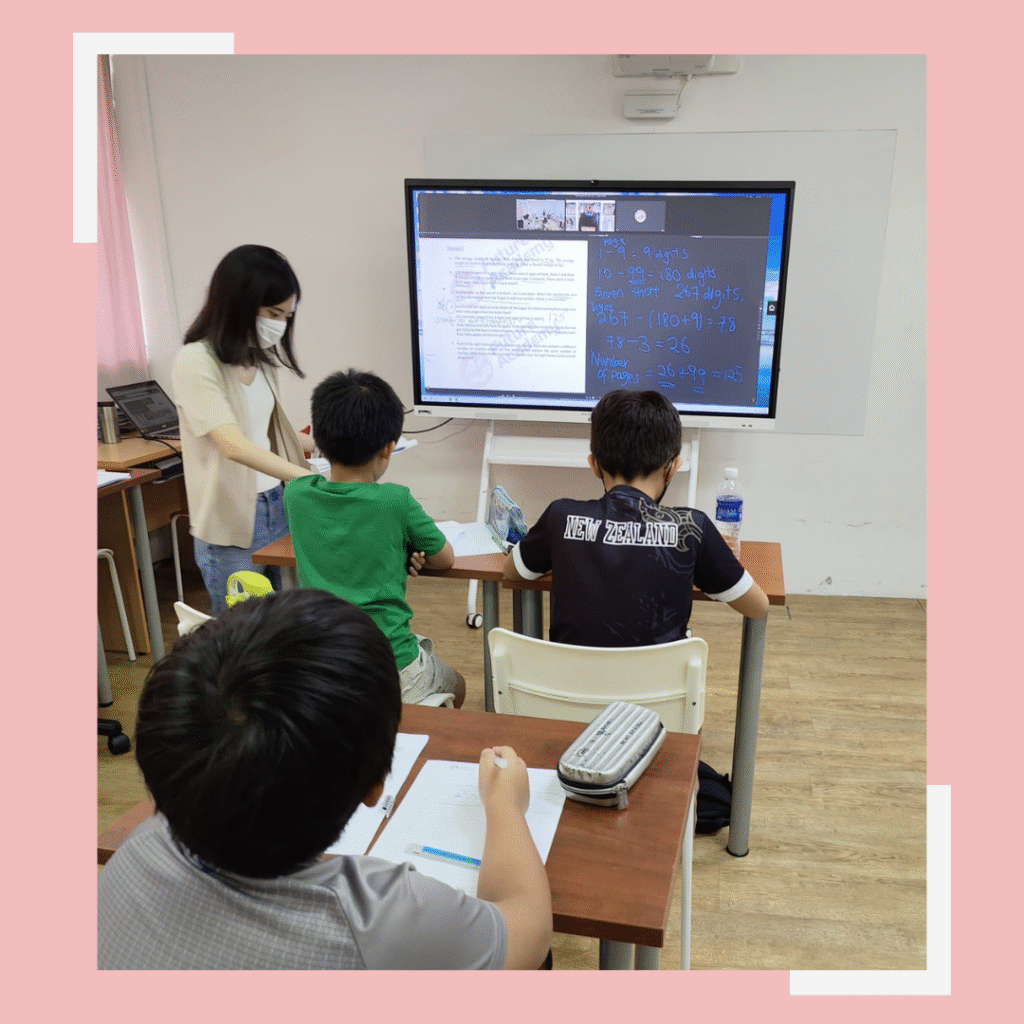
At Future Academy, our PSLE Math tuition programme addresses these challenges through small group classes with a maximum teacher-to-student ratio of 1:6. This format allows our experienced tutors to provide personalised attention while fostering collaborative learning. We focus on building deep mathematical understanding rather than rote memorisation, teaching students not just how to solve problems, but how to think mathematically. Many families also choose our PSLE lessons as a foundation for a stronger start in Sec 1, especially if they are aiming for IP schools.
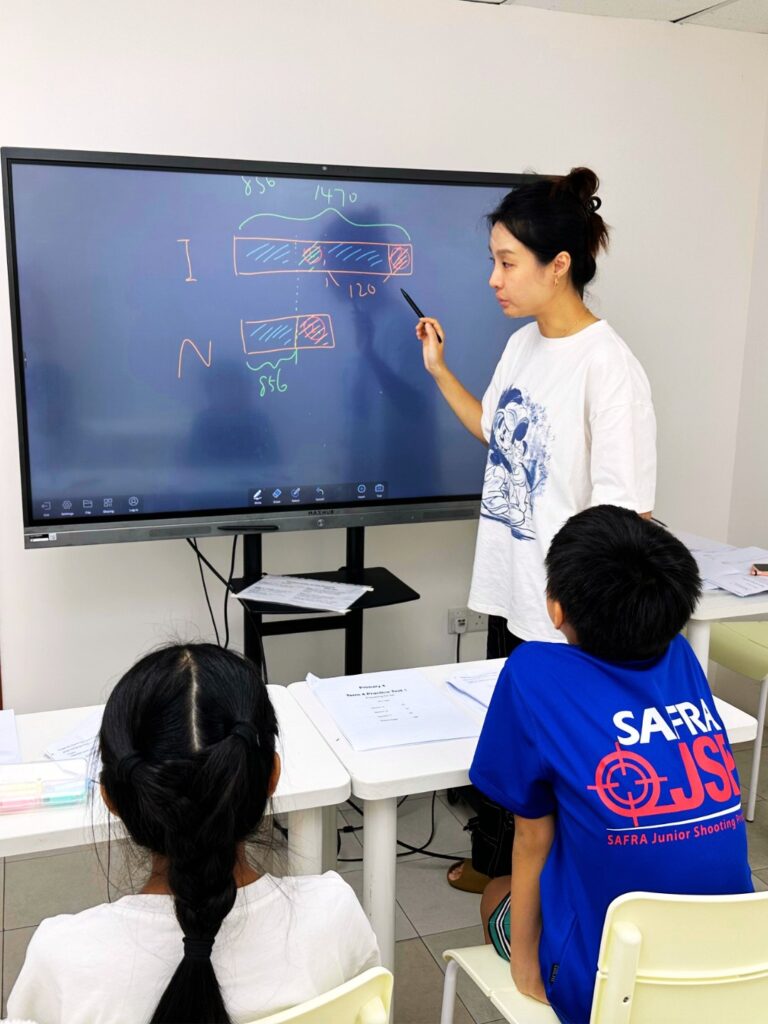
Our methodology combines concept mastery with systematic heuristics training—especially model drawing, which is a key strategy for PSLE Math word problems. Through regular practice with varied question types and feedback during lessons, students build both skills and confidence while strengthening foundations.
The PSLE Math Examination
Understanding the PSLE Math Challenge
The PSLE Math examination has evolved significantly, placing greater emphasis on problem-solving and application rather than straightforward computation. Success requires mastery across comprehensive topics while demonstrating higher-order thinking skills.
Comprehensive Topics
Whole Numbers, Fractions, Decimals, Percentage, Ratio, Rate, Speed, Algebra, Geometry, Area & Volume, Data Analysis—all tested with emphasis on application.
Heuristics Required
Model drawing, working backwards, pattern recognition, systematic lists, simplification, logical reasoning—students must apply multiple strategies to novel problems.
Achievement Level scoring
PSLE uses Achievement Levels (AL1–AL8), so small mistakes can change the AL. Students need clear working, accuracy, and good time management across both Paper 1 and Paper 2.
Our Teaching Methodology
Our PSLE Math Teaching Approach
Concept Mastery Before Procedures
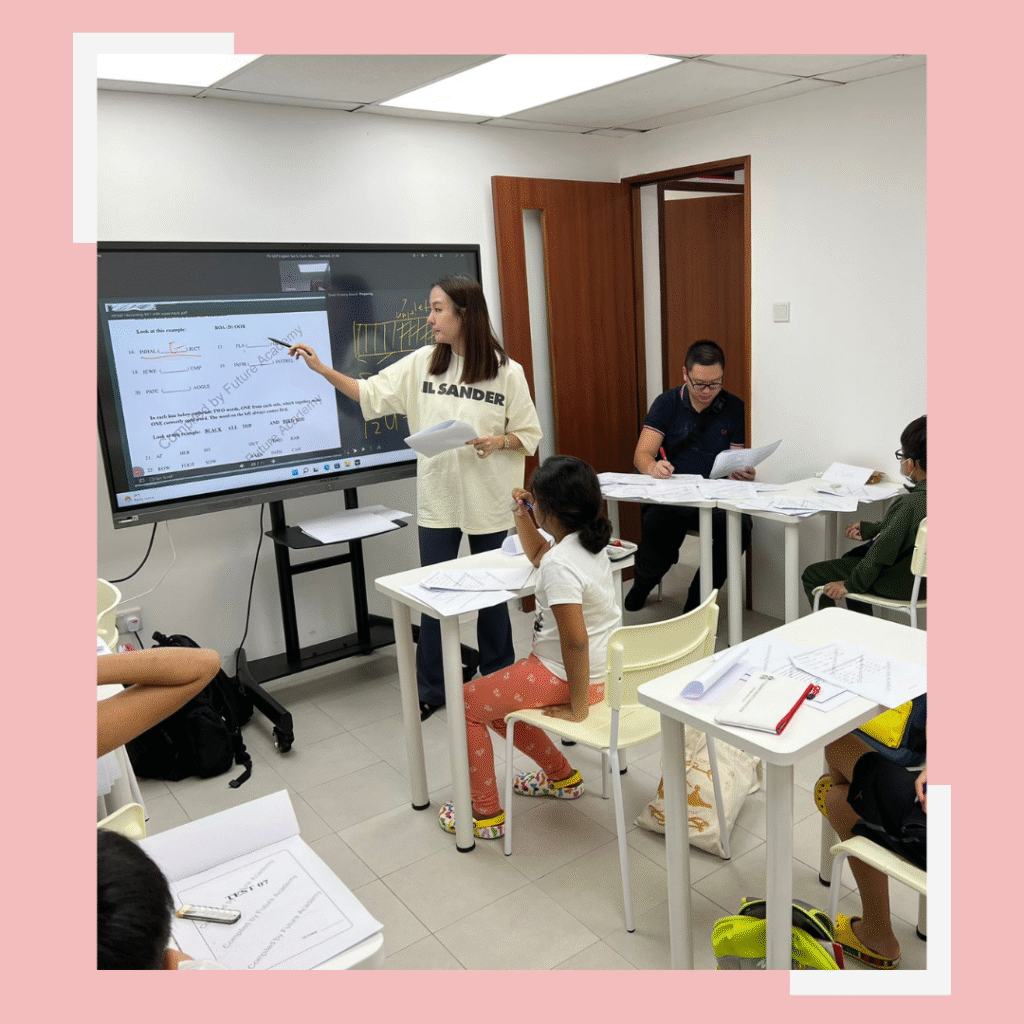
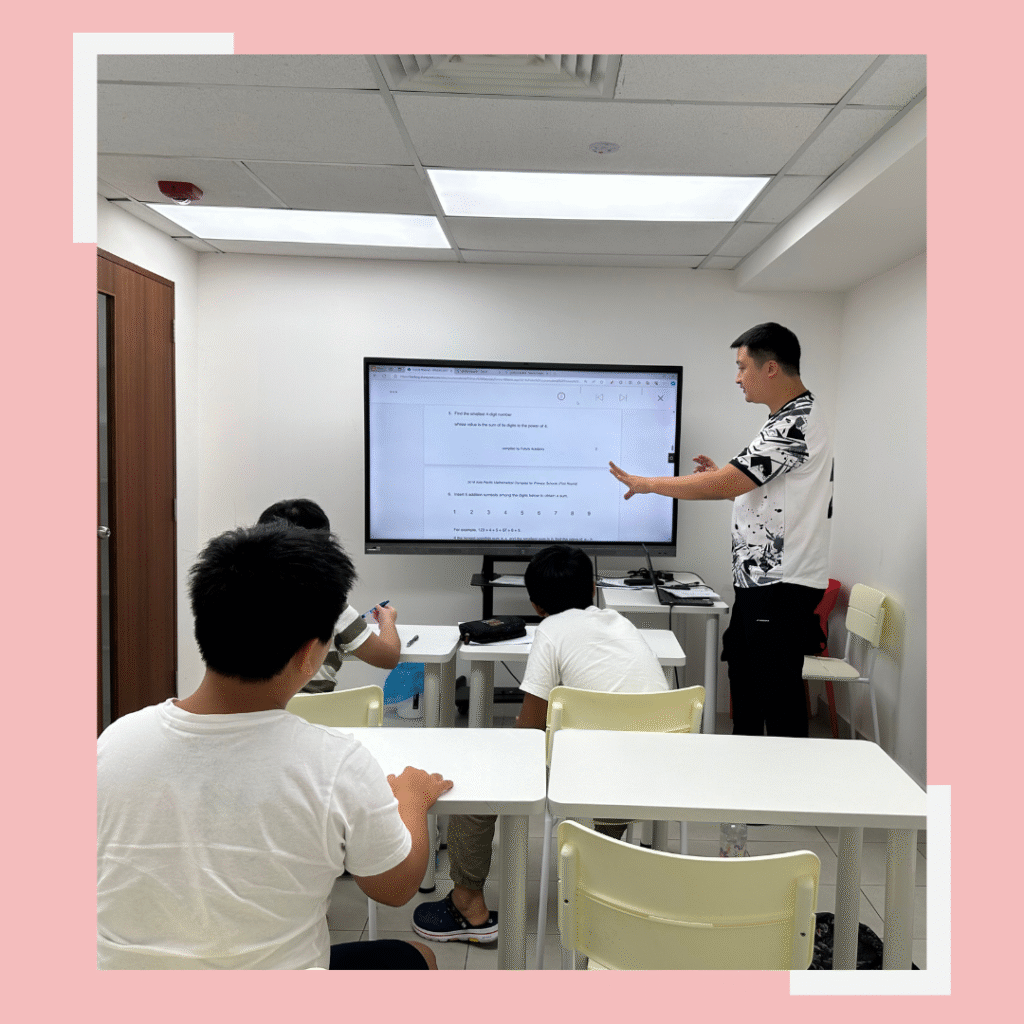
Our lessons begin with clear explanations that connect new concepts to prior knowledge. We use visual representations, concrete examples, and guided discovery to help students build mental models of mathematical relationships. For instance, when teaching Ratio, we do not simply present formulas—we explore what ratios represent, how they relate to fractions, and why certain operations work.
Systematic Heuristics Training
We teach problem-solving heuristics systematically, ensuring students build a robust toolkit of strategies. Model drawing receives particular emphasis as one of the most powerful and versatile heuristics for PSLE Math. Students learn to represent different problem types through bar models, developing the visual reasoning that makes complex problems manageable.
Beyond model drawing, we train students in working backwards from given answers, making systematic lists, looking for patterns, simplification strategies, and logical reasoning. Critically, we teach how to select appropriate strategies for different problem types through repeated practice with varied questions.
Regular Practice and Consolidation
Mastery requires purposeful, varied practice. Our lessons include carefully sequenced questions that progress from straightforward applications to complex, multi-step problems. We expose students to different question formats and contexts, preventing over-reliance on pattern recognition. Regular consolidation spirals back to earlier topics, ensuring foundations remain strong throughout Primary 6.
The Small Group Advantage
How 1:6 Small Groups Help PSLE Students
A maximum teacher-to-student ratio of 1:6 supports learning during this critical year. This format provides advantages that neither one-to-one tutoring nor large group classes can match.
Personalised attention for each child
With a maximum teacher-to-student ratio of 1:6, tutors can get to know each child’s strengths, weaknesses, and learning style. During lessons, teachers can observe problem-solving processes, identify struggles early, and provide targeted guidance and feedback. This supports steady progress without students falling behind or staying confused.
Peer Learning and Discussion
When students share their problem-solving approaches, they learn to articulate mathematical thinking and see alternative methods. Often, a peer’s explanation resonates differently than the teacher’s, providing the “aha moment” that unlocks understanding. These mathematical discussions teach students to justify reasoning and evaluate different approaches—precisely what PSLE Math demands.
More Practice Time Per Student
Students work on practice questions during each lesson and get feedback along the way. Instead of waiting days for corrections, they correct misconceptions early and learn how to improve their working and presentation. This helps students avoid repeating the same mistakes.
Confidence Building in Safe Environment
PSLE preparation can be stressful, and math anxiety undermines many students’ performance. Our small groups create safe, supportive environments where students feel comfortable asking questions and admitting confusion. As students experience success, their confidence grows—translating directly to examination performance as confident students approach problems more calmly.
Student Transformations
Student progress stories (PSLE Math)
From confusion to clearer methods: Sarah’s progress
Sarah joined in Primary 6 with weak foundations in ratio and multi-step word problems. In our small group lessons, we taught her to annotate questions and use bar models systematically. With steady practice, she became more accurate and more confident in tackling longer sums.
Stretching stronger students: Marcus’s progress
Marcus wanted more challenge beyond routine worksheets. In small groups, he learnt to compare different solution methods, spot common traps, and tackle tougher word problems with clearer working. This helped him improve speed, accuracy, and confidence under time pressure.
Overcoming Math Anxiety: Priya’s Transformation
Priya struggled with math anxiety, scoring inconsistently (55-75). The small group environment felt safe for asking questions. Her tutor taught anxiety management strategies and built confidence through incremental successes. Priya achieved AL3—tremendous personal growth that opened appropriate secondary school pathways.
Flexible Options
Flexible Learning Modes for Primary 4-6 Students
Our PSLE Math tuition offers flexible learning modes to accommodate different needs and preferences.
On-Site Learning
Bugis, Bukit Timah, Braddell. Dedicated environments optimised for focused learning. Direct interaction with tutors and peers. Excellent MRT connectivity.
Hybrid Learning
Best of both worlds. Attend some sessions on-site, others online via ClassIn. Perfect for busy P6 schedules with multiple commitments.
Online via ClassIn
Online lessons with a maximum teacher-to-student ratio of 1:6. Interactive platform with whiteboard, screen sharing, and real-time collaboration.
FAQ
FAQs About PSLE Math Tuition
Book PSLE Math lessons
PSLE Lessons Available | No Obligation | Experience Our Small Group Approach
✓ Max 1:6 teacher-to-student ratio ✓ Structured lessons and feedback ✓ On-site and online lessons