

A Level Physical Sciences
H2 Physics Tuition Singapore
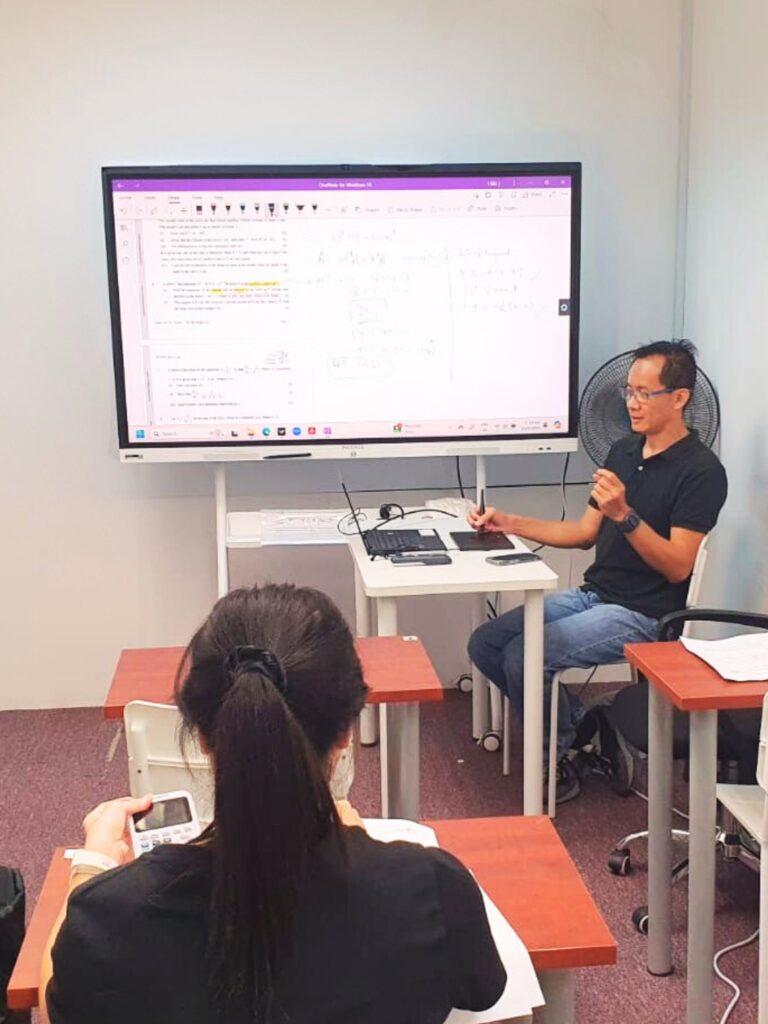
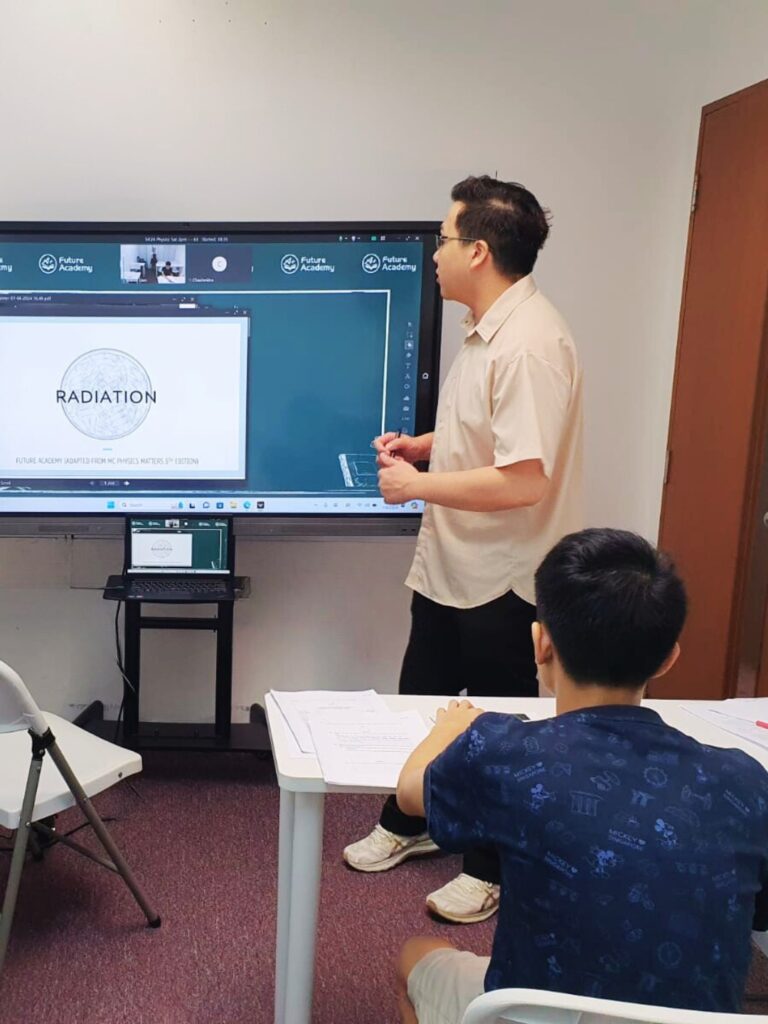
Master H2 Physics with Future Academy’s teaching team (led by Ms Chen and Mr Jason Lau). Build strong concepts, practise systematic problem-solving, and improve practical skills. Maximum teacher-to-student ratio of 1:6.
Concept-first H2 Physics
Master H2 Physics with clear concepts and structured practice
H2 Physics is challenging because it is fast-paced and application-heavy. Students need to understand concepts well enough to apply them in unfamiliar contexts, explain their reasoning clearly, and handle practical and data-based questions under time pressure. It is a key subject for many students aiming for Engineering and other STEM courses.
At Future Academy, our H2 Physics programme is delivered by our teaching team, led by Ms Chen and Mr Jason Lau. Ms Chen is a former Raffles Girls’ School (RGS) teacher, and she has 15+ years of teaching experience. Our lessons focus on deep concepts, practical skills, and exam-ready scientific reasoning.
Many students find that memorising formulas is not enough for H2 Physics. We teach the “why” behind the formulas, train systematic problem-solving, and practise applying concepts to unfamiliar questions so students can perform more consistently in tests and exams.
The Challenge
What Makes H2 Physics Uniquely Challenging
H2 Physics differs fundamentally from O Level Physics or IP secondary sciences. The depth of understanding required, mathematical sophistication demanded, and conceptual integration expected represent significant steps up from earlier science education.
Complete Coverage
The Complete H2 Physics Syllabus
H2 Physics spans classical and modern physics with extensive content from measurement and mechanics through to quantum physics. Our systematic curriculum covers all topics comprehensively, building deep understanding and problem-solving capability.
For our complete topic-by-topic teaching sequence from Secondary 3 through JC 2, see our full Physics tuition topic sequence →
Our Methodology
How we teach H2 Physics
As a former Raffles Girls’ School (RGS) teacher, Ms Chen has 15+ years of teaching experience. She focuses on deep conceptual understanding over memorisation. Students learn to connect abstract physics to real-world phenomena, build systematic problem-solving habits, and develop practical skills with clear guidance.
1:6 Format
The 1:6 Small Group Advantage for H2 Physics
Science learning requires active thinking, experimental discussion, and conceptual development—all enhanced by small-group format. With a maximum teacher-to-student ratio of 1:6, everyone participates in discussing physical concepts, explaining phenomena, and analysing experimental scenarios. This verbalisation deepens understanding far beyond passive listening.
Questions & Answers
Frequently Asked Questions About H2 Physics Tuition
Build confidence for H2 Physics
Maximum teacher-to-student ratio of 1:6 | Concepts, problem-solving and practical skills
✓ Led by former RGS teacher ✓ Maximum teacher-to-student ratio of 1:6 ✓ Practical skills training