

IP English Tuition Singapore
Master Writing, Comprehension & Oral Skills for IP English & Language Arts
Expert teaching team | Maximum 1:6 teacher-to-student ratio | All IP schools supported
IP English & Language Arts Specialists
Developing Strong Writers, Critical Thinkers & Confident Communicators
IP English and Language Arts demands more than competent grammar and vocabulary. Students must analyse literature critically, construct sophisticated arguments, craft compelling narratives, and articulate ideas persuasively in both written and oral formats. The pace is intensive, expectations are high, and assessment criteria require nuanced understanding of language, structure, and purpose.
At Future Academy, our IP English programme addresses these demands systematically. We develop strong foundations in essay writing techniques, comprehension strategies, and oral communication skills whilst building genuine language mastery. Our teaching team understands what IP schools expect—structured arguments, textual evidence, sophisticated vocabulary, and the ability to respond thoughtfully to unseen materials.
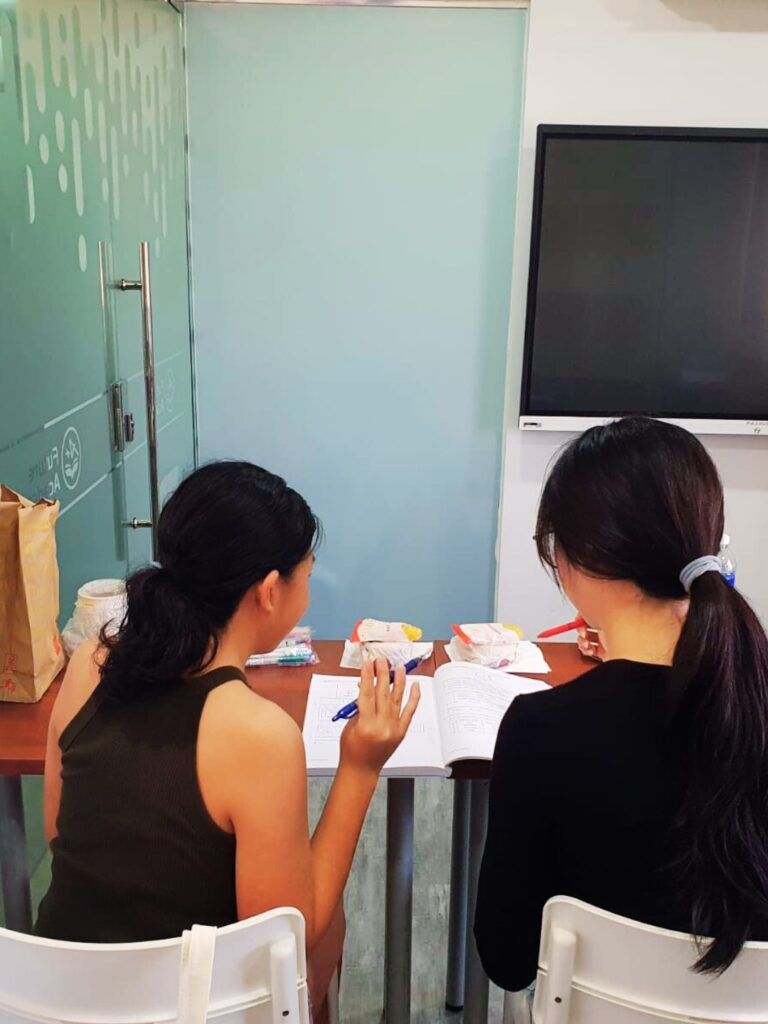
Our small-group format (maximum teacher-to-student ratio of 1:6) allows every student to practise speaking, receive detailed feedback on writing, and engage in meaningful literary discussions. This collaborative environment builds confidence whilst maintaining the personalised attention students need to refine their language skills.
The Challenge
What Makes IP English Uniquely Demanding
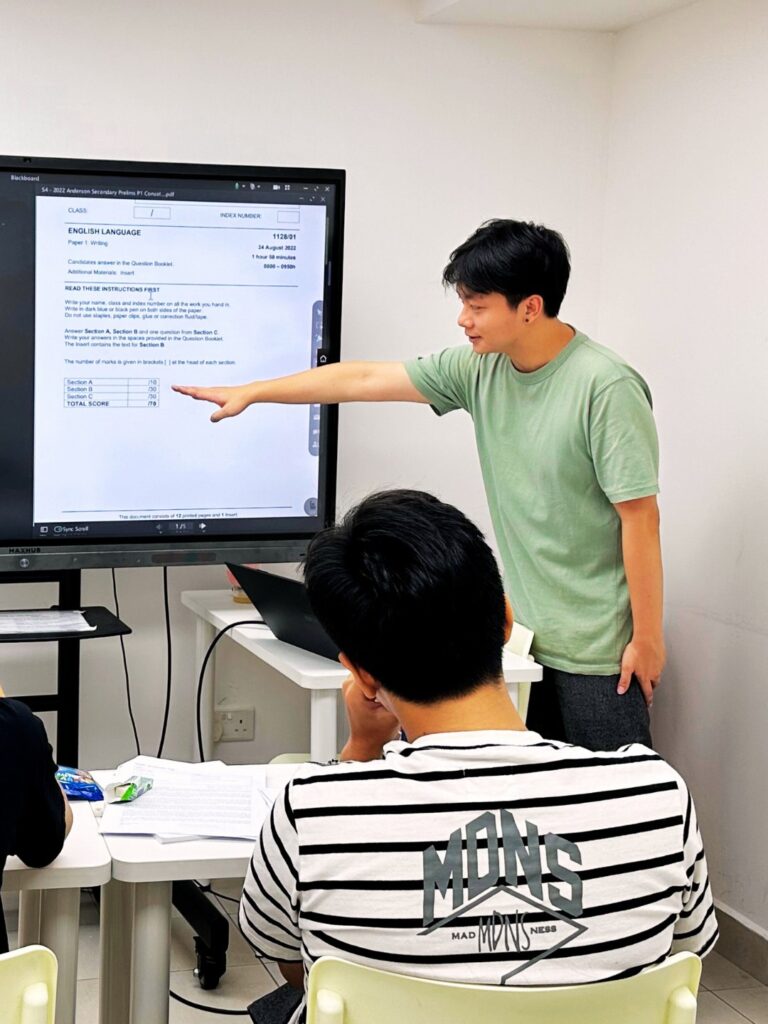
IP English and Language Arts differs fundamentally from O-Level English. The programme assumes strong foundational skills and accelerates rapidly into sophisticated analysis, creative expression, and critical evaluation. Many students who performed well at primary level find the transition challenging.
Complete Coverage
The Complete IP English & Language Arts Syllabus
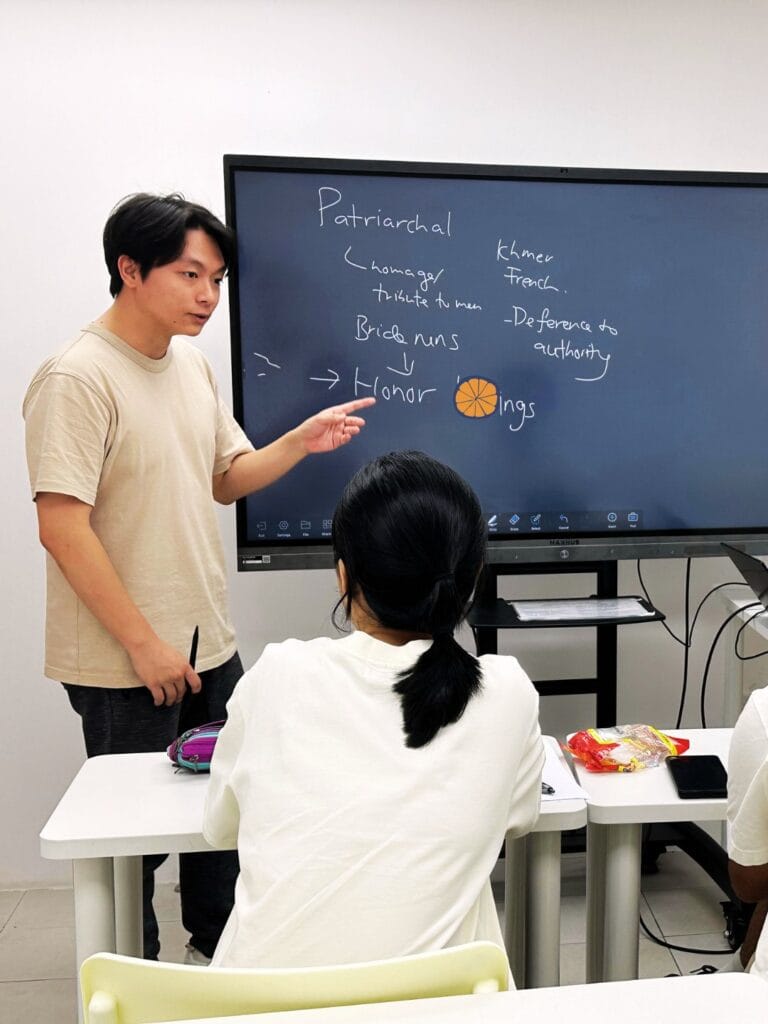
Our IP English programme provides systematic coverage of all examination components whilst developing genuine language mastery. We address both the technical requirements of each paper and the underlying skills students need for long-term success.
Paper 1: Continuous Writing
Students master four essay types—narrative, descriptive, argumentative, and discursive—developing structured frameworks, sophisticated vocabulary, and compelling writing techniques. We teach planning methods, paragraph development, and revision strategies that produce coherent, engaging essays under timed conditions.
Paper 2: Situational Writing & Comprehension
Situational writing requires adapting tone and format across diverse text types—formal letters, speeches, reports, proposals. We teach format conventions, register appropriateness, and audience awareness. For comprehension, students learn close reading techniques, inference strategies, and how to construct precise answers with appropriate textual evidence.
Paper 3: Listening Comprehension
Effective note-taking techniques and focused listening strategies ensure students capture key information whilst responding to higher-order questions requiring synthesis and evaluation of audio materials.
Paper 4: Oral Communication
Reading aloud with appropriate expression, tone, and pacing, followed by spoken interaction discussing stimulus materials. Our small-group format provides extensive speaking practice, building confidence and fluency whilst developing the ability to articulate thoughtful responses spontaneously.
Our Methodology
How We Develop Strong English Skills
Our systematic approach builds genuine language mastery whilst preparing students for examination success. We focus on transferable skills that serve students throughout their academic careers.
Structured Writing Frameworks
We teach systematic approaches to essay planning, paragraph development, and revision. Students learn how to construct coherent arguments, develop vivid descriptions, craft compelling narratives, and build balanced discussions with appropriate evidence and examples.
Close Reading Techniques
Students develop sophisticated comprehension strategies—identifying main ideas, making inferences, evaluating arguments, synthesising information. We teach how to locate precise textual evidence and construct answers that demonstrate genuine understanding rather than superficial reading.
Oral Fluency Development
Our small-group setting provides extensive speaking practice. Every student regularly reads aloud, participates in discussions, and articulates responses to visual stimuli. This builds confidence, improves pronunciation and expression, and develops the ability to think critically whilst speaking.
Vocabulary Enhancement
We systematically develop vocabulary through contextual learning, thematic word banks, and regular application in writing and speaking tasks. Students learn sophisticated synonyms, idiomatic expressions, and precise terminology that elevate their language use.
Critical Thinking Skills
We develop analytical capabilities through questioning techniques, discussion prompts, and literary analysis exercises. Students learn to evaluate arguments, identify assumptions, consider multiple perspectives, and construct reasoned judgements—skills transferable across all subjects.
Examination Technique Mastery
Students learn time management strategies, question analysis methods, and revision techniques specific to IP English assessments. We teach how to approach unfamiliar questions confidently, allocate time effectively across papers, and present answers that demonstrate understanding clearly.
1:6 Advantage
Why Small Groups Excel for Language Learning
English proficiency develops through active use—speaking, writing, receiving feedback, and refining expression. Our maximum teacher-to-student ratio of 1:6 creates the optimal environment for genuine language development.
More Speaking Practice Per Student: In classes of 20-30 students, speaking opportunities are minimal. Our small groups ensure every student regularly practises oral communication—reading aloud, discussing literature, and articulating responses to stimuli.
Individual Writing Feedback: Teachers can review each student’s essays in detail, identifying specific strengths and areas for improvement. This personalised feedback is impossible in large classes where teachers must manage dozens of scripts.
Peer Discussion and Debate: Small groups facilitate meaningful literary discussions where students hear different perspectives, challenge interpretations, and develop critical thinking through dialogue. This collaborative learning deepens understanding beyond individual study.
Personalised Attention to Language Gaps: Teachers can identify and address each student’s specific weaknesses—whether grammar, vocabulary, essay structure, or comprehension technique—providing targeted support that accelerates improvement.
Learn more about why small groups work exceptionally well for IP students.
All IP Schools
IP Schools We Support
We provide IP English tuition for students from all integrated programme schools. Our teaching adapts to each school’s specific assessment formats, text selections, and examination requirements.
Raffles Girls’ School (RGS) | Raffles Institution (RI) | Hwa Chong Institution (HCI) | Nanyang Girls’ High School (NYGH) | Anglo-Chinese School Independent (ACSI) | Dunman High School (DHS) | Methodist Girls’ School (MGS) | St. Joseph’s Institution (SJI) | Victoria Junior College (VJC) | National Junior College (NJC)
View our complete IP schools coverage for school-specific information.
FAQ
IP English Tuition Questions
Ready to Strengthen Your English Skills?
Join our small-group IP English programme and develop the writing, comprehension, and communication skills that will serve you throughout your academic career. Book a trial lesson today.
✓ Maximum 1:6 teacher-to-student ratio ✓ All IP schools supported ✓ Bugis, Bukit Timah & Braddell centres