
PSLE Chinese Tuition Singapore
Expert Primary 4-6 Chinese MT Preparation | All Four Papers Excellence
Master Composition, Comprehension, Oral & Listening | 1:6 Small Groups | AL1 & AL2 Success
Mother Tongue Specialists
Mastering All Four PSLE Chinese Papers for Excellence
The PSLE Chinese examination is often the determining factor for many students’ overall Achievement Levels. Success requires mastery across four distinct papers—Composition, Language Use & Comprehension, Oral Communication, and Listening Comprehension—each demanding different skills and examination techniques. Many students struggle not from lack of ability but from insufficient training in structured composition writing, confident oral expression, and effective comprehension strategies.
At Future Academy, our PSLE Chinese tuition programme develops comprehensive Chinese language capabilities through expert teaching in small groups with a maximum teacher-to-student ratio of 1:6. Our experienced mother tongue specialists understand what PSLE Chinese demands and train students systematically across all four papers. This format allows for personalised attention while fostering collaborative learning—particularly crucial for language learning where students need regular opportunities to speak, write, and receive detailed feedback.
In our small-group format (maximum teacher-to-student ratio of 1:6), every student receives substantial speaking practice each lesson, detailed composition feedback, and targeted support for weak areas. We focus on building natural Chinese expression rather than English-influenced translation, developing engaging composition skills, and building confidence for oral examinations in a supportive environment where students feel comfortable practicing and making mistakes as they learn.
The PSLE Chinese Examination
Understanding the PSLE Chinese Challenge
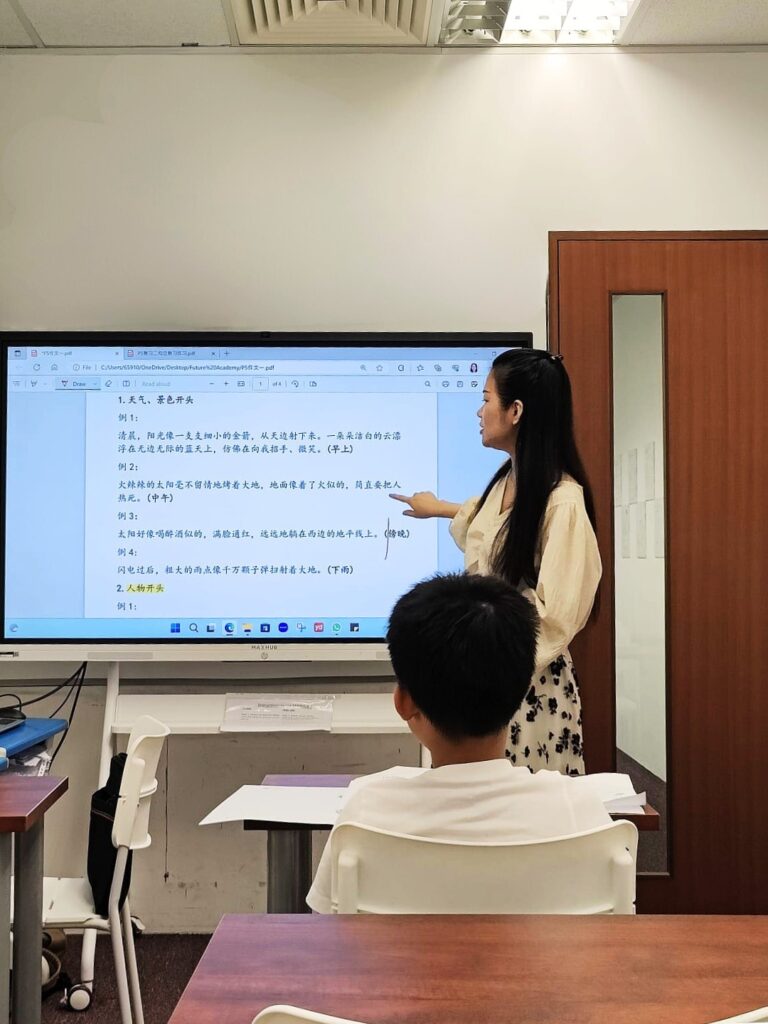
PSLE Chinese consists of four papers testing different language competencies. Success requires mastery of distinct skill sets from creative writing to confident oral expression to analytical comprehension.
All Four Papers
Paper 1 (Writing: Situational & Composition), Paper 2 (Language & Comprehension), Paper 3 (Oral Communication), Paper 4 (Listening Comprehension)—comprehensive assessment of Chinese proficiency.
Multi-Faceted Skills
Creative composition writing, vocabulary and grammar mastery, reading comprehension, confident oral communication, and focused listening—all require dedicated practice and technique training.
Critical for Overall AL
Chinese often determines overall PSLE Achievement Level and secondary school placement. Strong Chinese performance significantly impacts future educational opportunities and pathways.
Our Teaching Methodology
Our PSLE Chinese Teaching Approach
Building Strong Composition Skills
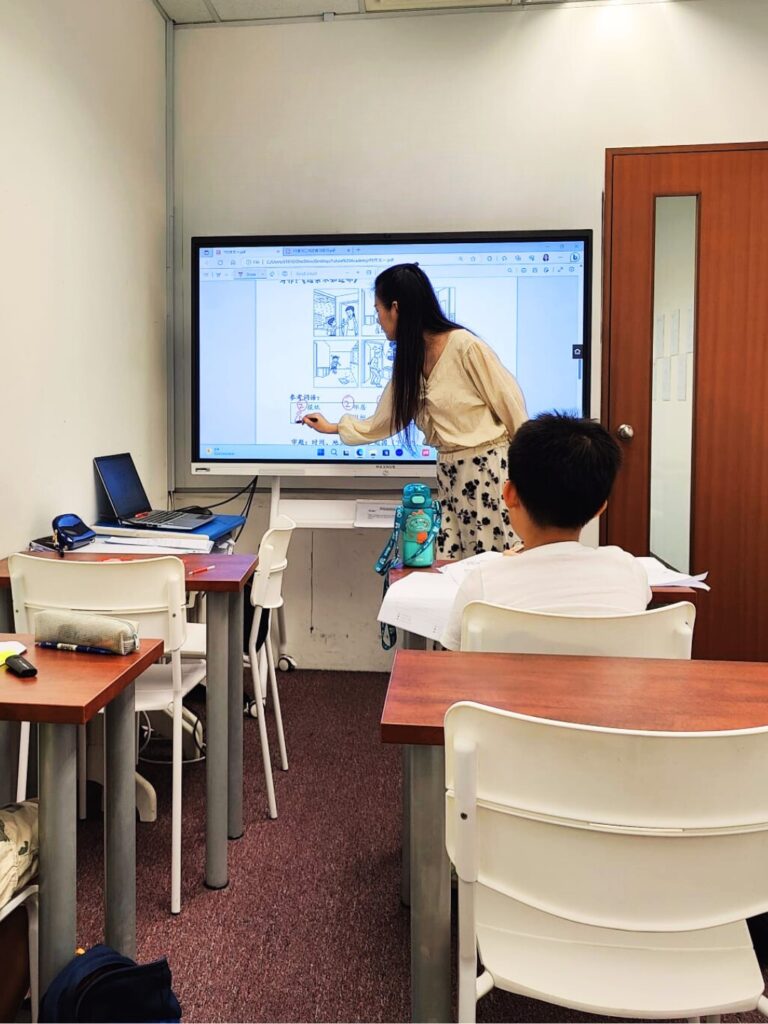
Our composition training develops students’ ability to write engaging, well-structured narratives. We teach systematic brainstorming techniques, master proper narrative structure with engaging openings and satisfying conclusions, build active vocabulary beyond basic words, and develop varied sentence structures. Regular timed practice builds speed and stamina, while personalized feedback on every composition ensures continuous improvement.
Mastering Comprehension Techniques
We teach efficient reading strategies, question analysis skills, evidence location techniques, and proper answer construction. Students learn to identify different question types, locate relevant text portions quickly, and answer completely using proper formats. MCQ strategy and systematic time management ensure students complete papers efficiently while maintaining accuracy.
Developing Confident Oral Performance
Students practice reading aloud with proper pronunciation and expression, learn to analyze pictures systematically, and develop natural Chinese expression for conversation portions. With a maximum teacher-to-student ratio of 1:6, everyone practices speaking extensively each lesson, receiving immediate correction and feedback that builds both accuracy and fluency. This regular practice in our supportive environment transforms nervous speakers into confident communicators.
The Small Group Advantage
How 1:6 Small Groups Benefit PSLE Chinese Learners
Language learning requires active practice, immediate feedback, and regular usage—all enhanced by our small group format. This is essential for Chinese language development where students need frequent speaking and writing opportunities.
Essential Speaking Practice
With a maximum teacher-to-student ratio of 1:6, everyone reads aloud, answers questions, and participates in discussions every lesson. This regular practice builds fluency and confidence essential for oral examinations. Students receive immediate correction on pronunciation, grammar, and expression—preventing errors from becoming habits.
Detailed Writing Feedback
Every student’s composition receives detailed, personalized feedback identifying specific language errors and suggesting improvements. In small groups, tutors can provide individual comments on each composition—hard to do consistently in large classes where marking is superficial or delayed. Students revise their work, internalizing effective techniques.
Personalized Language Development
Tutors identify each student’s specific weaknesses—vocabulary, grammar, expression—and provide targeted practice addressing individual needs. This personalized approach ensures no student falls behind or retains language errors that would undermine PSLE performance. Progress is tracked across all four papers systematically.
Confidence Building in Safe Environment
PSLE Chinese anxiety is common, particularly for students from English-dominant families. Our small groups create safe environments for practicing without embarrassment. As students experience progressive success, their confidence grows—translating directly to examination performance as confident students approach all papers more calmly and effectively.
Student Transformations
PSLE Chinese Success Stories
From Avoiding Chinese to AL2: Sarah’s Journey
Sarah from English-speaking family scored 55-65%, struggling with composition and oral. In our small groups, structured frameworks and regular practice built her skills and confidence. Her writing became sophisticated as vocabulary expanded. By Prelims she scored 72. Sarah achieved AL2 in PSLE Chinese.
Reaching Excellence: Marcus’s AL1 Story
Marcus scored 75-80 but wanted AL1. Through small group discussions, he encountered diverse ideas and expressions. Advanced composition techniques and comprehension drills built his proficiency. His writing became engaging and sophisticated. Marcus achieved AL1 with 88%.
Conquering Oral Anxiety: Hui Min’s Growth
Hui Min had solid reading/writing but struggled with oral anxiety. The small group provided non-threatening practice opportunities. With a maximum teacher-to-student ratio of 1:6, she practiced speaking every lesson. Her fluency and confidence improved dramatically. Strong oral performance contributed to her overall AL2 achievement.
Flexible Options
Flexible Learning Modes for Primary 4-6 Students
We understand Primary 6 is an incredibly busy year. Our PSLE Chinese tuition offers flexible learning modes to accommodate different needs and preferences.
On-Site Learning
Bugis, Bukit Timah, Braddell. Immersive Chinese language environment with direct interaction. Particularly beneficial for oral practice. Excellent MRT connectivity.
Hybrid Learning
Mix on-site and online attendance based on schedule needs. Oral practice on-site while doing comprehension online when convenient. Perfect for busy P6 schedules.
Full Online via ClassIn
Complete online learning maintaining 1:6 small groups. Oral practice effective with clear audio/video. Interactive platform with whiteboard and screen sharing. No travel time.
FAQ
FAQs About PSLE Chinese Tuition
Start Your Child’s PSLE Chinese Success Journey Today
Experience Our 1:6 Small Group Approach
✓ Trusted by PSLE families across Singapore ✓ Mother tongue specialists ✓ AL1 & AL2 achievers