

A Level Chemical Sciences
H2 Chemistry Tuition Singapore
Master H2 Chemistry with experienced Chemistry teachers. Build systematic understanding from physical to organic chemistry, and practise answering techniques for JC1/JC2 tests. Small groups with a maximum teacher-to-student ratio of 1:6.
Concept-first H2 Chemistry
Master H2 Chemistry with clear concepts and structured practice
H2 Chemistry covers a wide range of topics across physical, inorganic and organic chemistry. To do well, students need clear concepts, strong application skills, and consistent practice connecting topics together. It is also a common subject choice for students aiming for courses such as Medicine, Pharmacy, Chemical Engineering and Life Sciences.
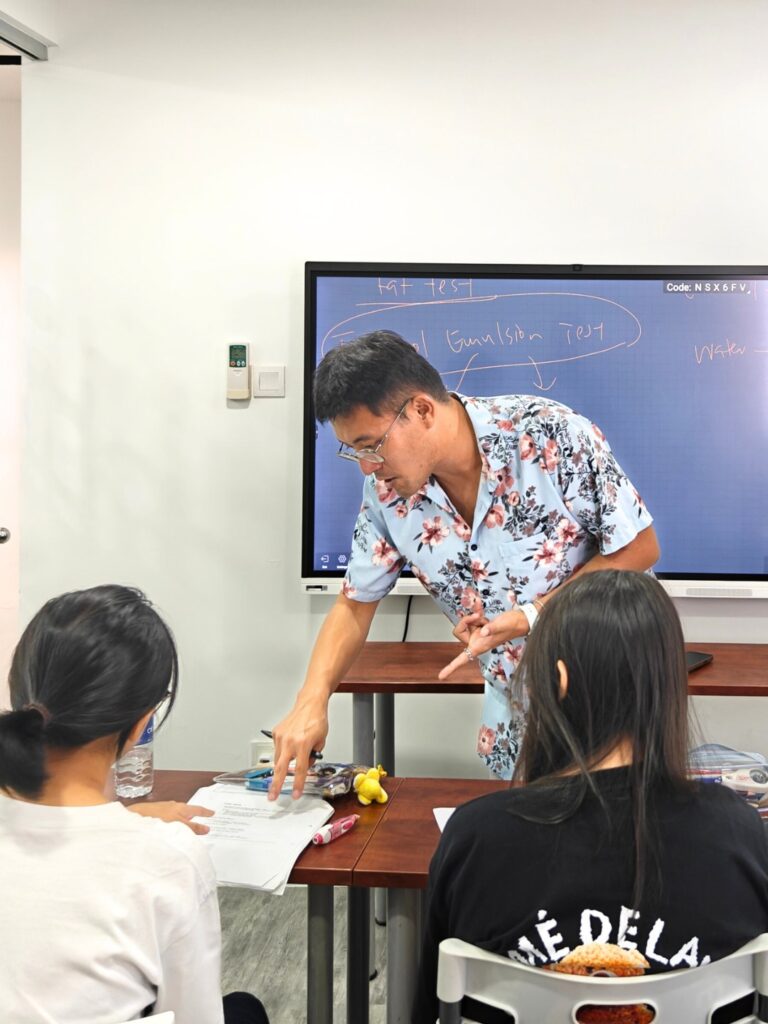
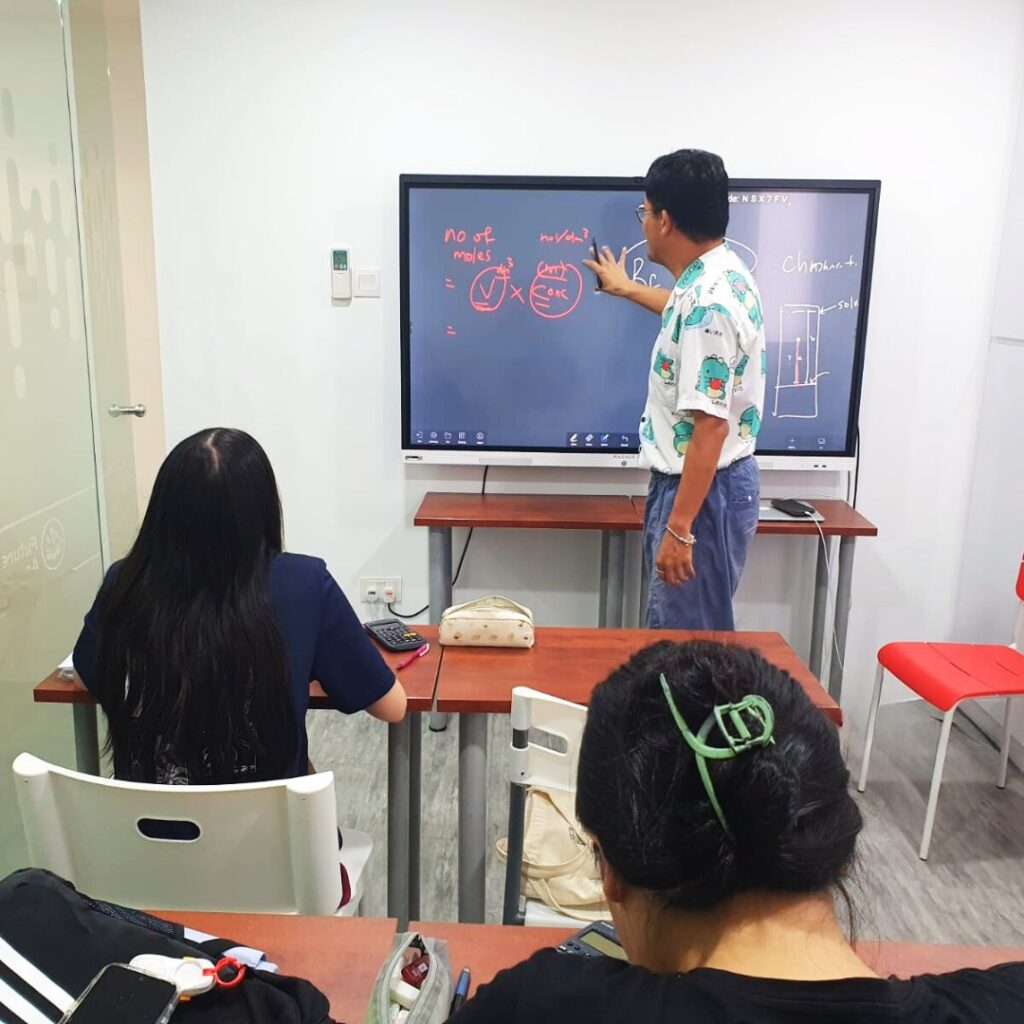
At Future Academy, our H2 Chemistry tuition is taught by experienced Chemistry specialists. Lessons focus on understanding first, then structured practice: how to choose the right approach, show clear working, and write precise explanations using the right keywords.
Many students struggle with H2 Chemistry because it is not just memorisation—students must explain mechanisms, predict reactions, analyse structures, and apply concepts to unfamiliar contexts. We teach organised frameworks and practise exam-style questions so students become more consistent.
The Challenge
What Makes H2 Chemistry Uniquely Demanding
H2 Chemistry differs significantly from O Level Chemistry or IP secondary sciences. The breadth of content, depth of understanding required, and integration expected represent substantial increases in difficulty.
Complete Coverage
The Complete H2 Chemistry Syllabus
H2 Chemistry spans extensive content across three major branches: physical chemistry (bonding, energetics, kinetics, equilibria), inorganic chemistry (periodic trends, Group 2, halogens, transition elements), and organic chemistry (mechanisms, functional groups, synthesis, spectroscopy). Our systematic curriculum covers all topics comprehensively.
For our complete topic-by-topic teaching sequence from Secondary 3 through JC 2, see our full Chemistry tuition topic sequence →
Our Methodology
Our Approach to H2 Chemistry Excellence
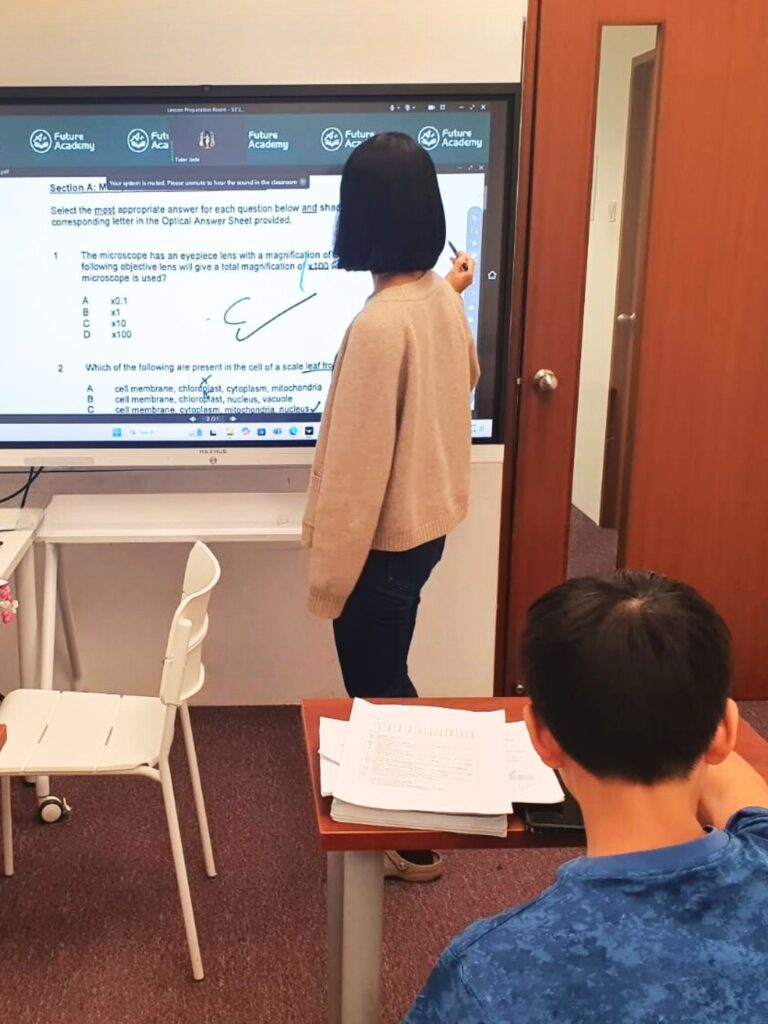
Our Chemistry specialists build systematic teaching approaches. Rather than treating Chemistry as facts to memorise, we build organised frameworks: how atomic structure determines bonding, how bonding influences properties, and how molecular structure determines reactivity. This helps students see Chemistry as a coherent subject and answer questions with more confidence.
1:6 Format
The 1:6 Small Group Advantage for H2 Chemistry
Chemistry learning benefits tremendously from small-group format. With a maximum teacher-to-student ratio of 1:6, everyone participates in discussing chemical concepts, explaining mechanisms, and analysing reactions. This verbalisation deepens understanding far beyond passive listening. Chemistry misconceptions are common and problematic—our educators identify and correct errors immediately before they become ingrained.
Questions & Answers
Frequently Asked Questions About H2 Chemistry Tuition
Start Your H2 Chemistry Success Journey Today
Experienced Chemistry specialists | Maximum teacher-to-student ratio of 1:6 | Concepts, application and exam technique
✓ Experienced Chemistry specialists ✓ Maximum teacher-to-student ratio of 1:6 ✓ Structured answering skills